
Supreme × A.PRESSE Makes the Case for Fabric Over Graphics
Supreme's Fall 2026 collaboration with A.PRESSE released on September 10, with Asia following on the 12th, and it is almost entirely about what the clothes are made of.
That tracks with the partner. A.PRESSE is the Japanese label founded by Kazuma Shigematsu, built around workwear, military clothing and tailoring, where the choice and finish of a fabric does the work that a graphic does almost everywhere else in streetwear. Putting Supreme's name next to a label like that is a decision about where the attention should go.
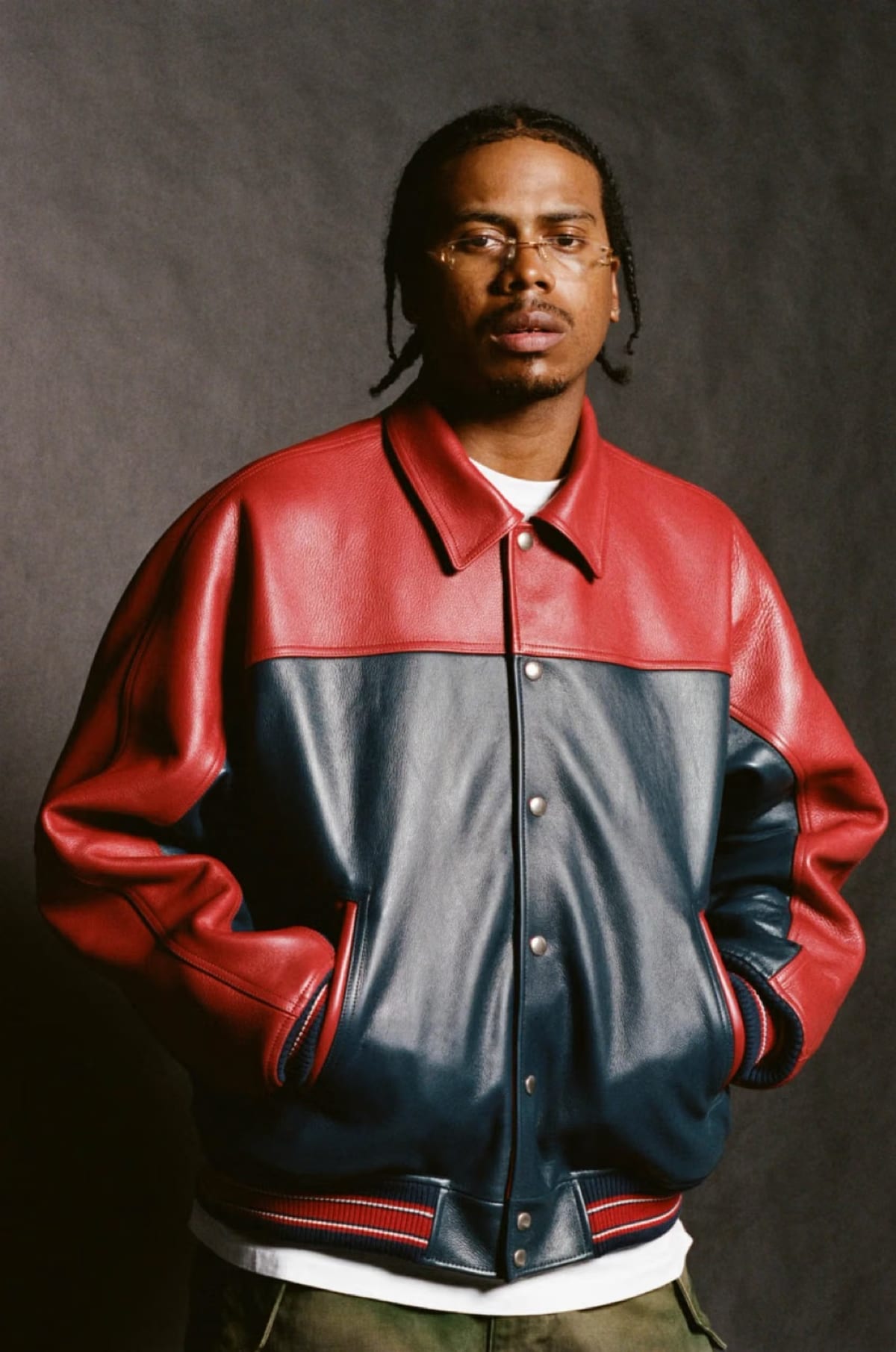
The product list reads like a materials spec. There's a leather jacket in all-black calfskin, and a cowhide version that's the collection's one real concession to Supreme's louder side — colorblocked red and navy, with PARK VIEW lettering across the back. An M-65 jacket and a cargo pant come in cotton with hand-applied camouflage. A suit is cut from a cotton-silk blend, a shirt from David & John Anderson cotton pin Oxford, and a vintage zip-up hooded sweatshirt is lined in cotton waffle thermal. The accessories stay in the same register — a camp cap, a cashmere beanie and a 20-inch sterling silver key chain — and production was spread across Japan, Portugal and the US.
Hand-applied camo is the detail worth sitting with. Camouflage might be the most reproduced print in the whole category, machine-printed onto everything from hoodies to phone cases. Applying it by hand turns the most mass-produced pattern streetwear has into something slow and individual, which is more or less A.PRESSE's entire argument in a single garment.
It also fits a year in which Supreme's most interesting moves have been about who it lets near the brand. Earlier in 2026 it gave MM6 Maison Margiela the first Box Logo zip hoodie in the mark's history — a partner defined by deconstruction and provocation. A.PRESSE is the opposite kind of collaborator. No provocation at all, just the claim that a well-made garment doesn't need anything added to it.
For a brand whose whole identity grew out of a red box, that's a surprisingly confident thing to put its name on.
Keep Reading
Comments
No comments yet — be the first.